

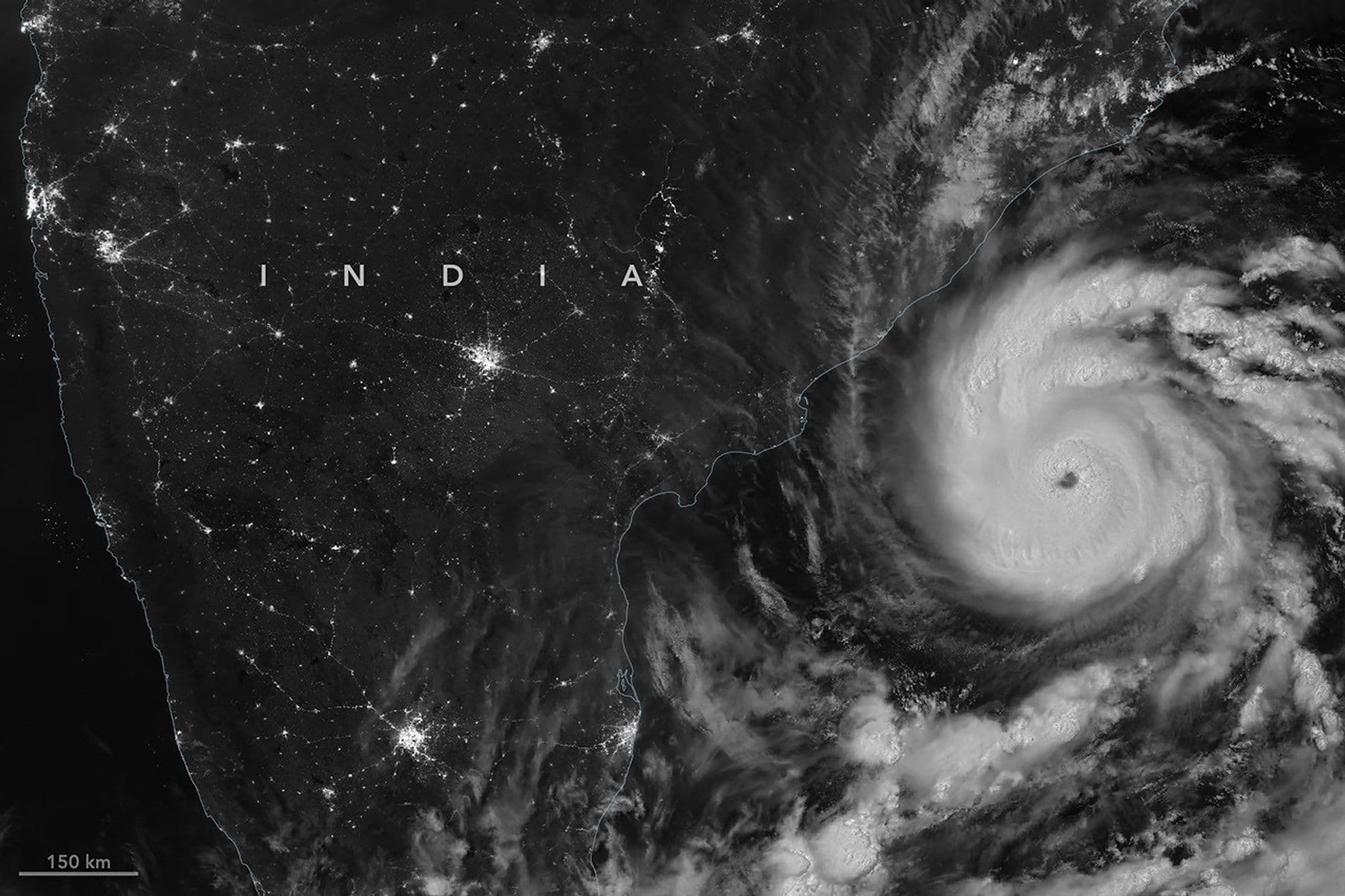
Cyclone Slams India for Third Time This Month (And Our UBX Cloud India Team Stays Focused)
Our UBX Cloud India team has been dealing with some unbelievably severe weather.
UBX Cloud
We just want to give a shout-out to our UBX Cloud India team, as they’ve been dealing with some unbelievably severe weather that most of us here in the United States never even give a thought to.
Over the course of the past month or so, not one, not two, but three massive cyclones have hit the nation of India. This report on the severity of the storm came straight from NASA:
The first named storm of the 2026 North Indian Ocean cyclone season—Arnab (pronounced Or-nab)—emerged in the Bay of Bengal on October 25, a rather late start for a basin that typically produces named cyclones in April or May. When the VIIRS (Visible Infrared Imaging Radiometer Suite) on NOAA-20 captured this nighttime image at 20:12 Universal Time on October 26 (1:42 a.m. India Standard Time on October 27), the storm had sustained winds of about 140 kilometers (85 miles) per hour, according to the India Meteorological Department (IMD). When the VIIRS (Visible Infrared Imaging Radiometer Suite) on NOAA-20 captured this nighttime image at 20:12 Universal Time on October 26 (1:42 a.m. India Standard Time on October 27), the storm had sustained winds of about 140 kilometers (85 miles) per hour, according to the India Meteorological Department (IMD). When Arnab made landfall on the Andhra Pradesh and Yanam coast early on October 28, sustained winds were 130 kilometers per hour. IMD categorizes a storm that strength as a "very severe cyclonic storm," which is similar to a Category 1 storm on the Saffir-Simpson hurricane wind scale. It made landfall between Bapatla and Visakhapatnam, a heavily settled area home to large cities, farmland, and fishing communities. Arnab caused extensive damage, uprooting trees, inundating crops and homes, limiting fishing operations, and disrupting transportation and power networks, according to news reports. Prior to landfall, Indian authorities had evacuated tens of thousands of people from vulnerable coastal areas.
We had some reports of people in India who were left with no running water, and were attempting to catch rainwater for washing and drinking because they had no other options.
In the midst of it all, we’ve been proud of our UBX Cloud India team, led by managing director Mohamed Ali. We did a feature on them just a few months ago.
The India team has continued to show up, interact with us on accounts and show the professionalism we always expect from them. And all are reported safe, we’re glad to let you know.
We’re proud of their professionalism and their toughness. We don’t get cyclones here in the United States, and we can safely admit we don’t think through how good we have it.
Related Posts
All posts


TV Station Ghosted by Cloud Storage Provider Endures Ordeal To Reclaim Data: Here’s Why It Won’t Happen If You Work With Us
The station (Nine PBS) was storing data with Open Source Storage (OSS).

Uh Oh! There Are More Victims of the Cyberattack On EY (But It Doesn’t Have to Happen to You)
So how did it happen?

Cybersecurity Stocks Soared This Week, Because ‘Lost In Space’ Was Right About Agentic AI
If you’ve invested in cybersecurity stocks, you’ve had a very good few days.